Today let’s talk about prophecy. I deeply despise prophecies. I understand that the audience wants to know what the payoff is and when someone reveals a prophecy it lets them know “when that thing happens, the story is over.” But as any experienced fantasy reader knows THE PROPHECY IS NEVER WRONG. This undercuts both the suspense sustaining our attention through all the plot twists as well as the character-defining moments that happen when a protagonist is forced to make their own decisions and experience the consequences.
Sometimes a prophecy unfolds in unexpected ways, like in Frozen when Anna commits an act of true love for Elsa, thus breaking the curse of her icing over. The audience (and Anna) expects the “act of true love” to be something the handsome prince must do for her. The unexpected interpretation of the prophecy adds a reveal and a feminist message, which is exciting. But does anyone ever doubt that Anna will be saved from icing over? This movie is intended for a very young audience, so it is appropriate that the world is simple and safe.
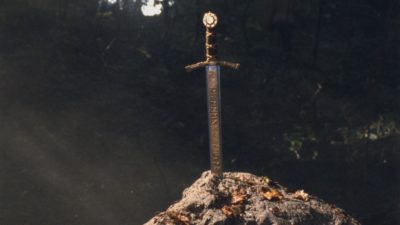 For teens and adults, this formula can become tiring. A savvy fantasy novel/comic book/TV/movie consumer will hear “the sword can only be wielded by one of noble/elven/magician’s blood,” and instantly knows that this will happen to be our protagonist. Any mucking about after that with the protagonist pretending they don’t know they are going to wield this sword is silly and tries the reader’s patience. At that point the only thing we are in suspense of is how the protag does this, but not what they will do. Maybe I’m just a suspense junkie, but I have trouble reading all the stuff in the middle of the book when you just told me how the story ends. The stakes go way down when a prophecy assuring the good guy’s success is introduced.
Decision-making and its consequences become muddied when a prophecy is introduced. Is the protagonist choosing the blue door over the red door because they have a reason, or because they have “a strange feeling about it,” because they are the “chosen one?” I’m certainly not against magical boons: spells, charms, or enchanted objects that answer questions and open doors for a protag. But when a character gets through many of their obstacles either because they were born with a magical sixth sense that gives them all the answers, or because they are surrounded by their “chosen one” entourage who does everything for them, it really makes the reader lose sympathy. It’s hard to root for a protagonist who is spoiled and never has to make a hard decision and then deal with the terrifying consequences. We sympathize with a character who stands on the precipice of the unknown, in over their head, and has to give it their best shot without knowing if their scheme will work, but knowing it will cost them dearly to try. These sort of decisions reveal what is most important to the character – and what they are willing to sacrifice to get it. No one has to spell it out for us because it is revealed through their actions.
 It is part of the essential nature of our existence that our lives unfold in a linear fashion and we can’t know how all of our hopeful endeavors will turn out. Are we doing the right thing? Should we quit while we’re ahead? Did we miss the forest for the trees? It is one of the great comforts of reading to sit with a protagonist in their moment of darkness and listen to them ponder what they should do. It lets me know I am not alone. To rob them of the agency to make their own decisions reduces them to paper dolls. I do not care to read about such characters.

 L.A. Kuemmel