Let’s hear it for the DILF

In recent years I have noticed a steady stream of both incredibly hot, and emotionally mature male characters in the sci-fi and fantasy shows I am streaming. Often times they are dads or adoptive father figures for other characters on the show. This is a wonderful relief as a middle aged woman who gets tired of watching so many teen angst series.

It is really sexy to see a man who knows there are things in the world that are more important than his ego and who has the confidence to nurture others without thinking this will make him look weak. In an effort to celebrate this (hopefully growing) phenomenon, here is a list of my favorite DILFs (both biological and adoptive) from the last five years of streaming episodic SF/F shows.

And in case you don’t know what a DILF is, it’s like a MILF, but with dads.
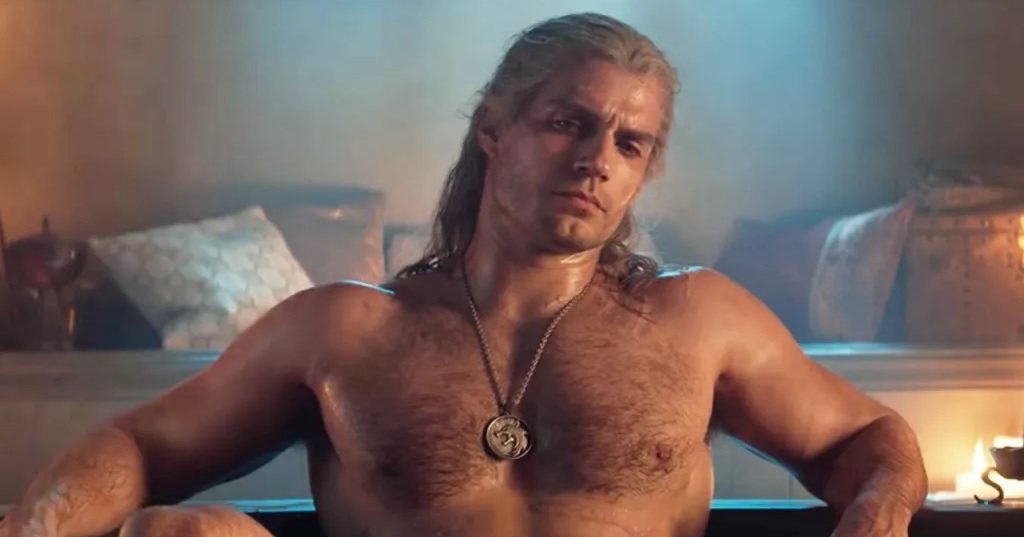
Bath time for Geralt of Rivia

The Witcher on Netflix
Henry Cavill as Geralt of Rivia
Adoptive father to Freya Allan as Ciri


Gruff, understated, and oh so sensitive to the feelings of his new, young charge. Also, wounded by a broken heart which he hilariously describes to an old friend in season two with: “I fell in love. She died. A few days ago.” all without cracking a single expression. I love characters that don’t say a lot (can we take a moment to cheer adoptive MILF Ming-Na Wen as Melinda May on Agents of SHIELD?). The vast gulf between what they say and what they don’t say (but which we understand) creates dramatic and sometimes comic tension onscreen. And when they finally do speak, we lean in and listen. If there was a drinking game for this show, you would drink every time Geralt says “Hm.” Cavill has a full-on He-Man action figure physique (this is the guy who played Superman), which is usually a bit much for my personal taste but I’m giving him a pass because I love the way his stringy, silver hair always falls into his golden eyes.
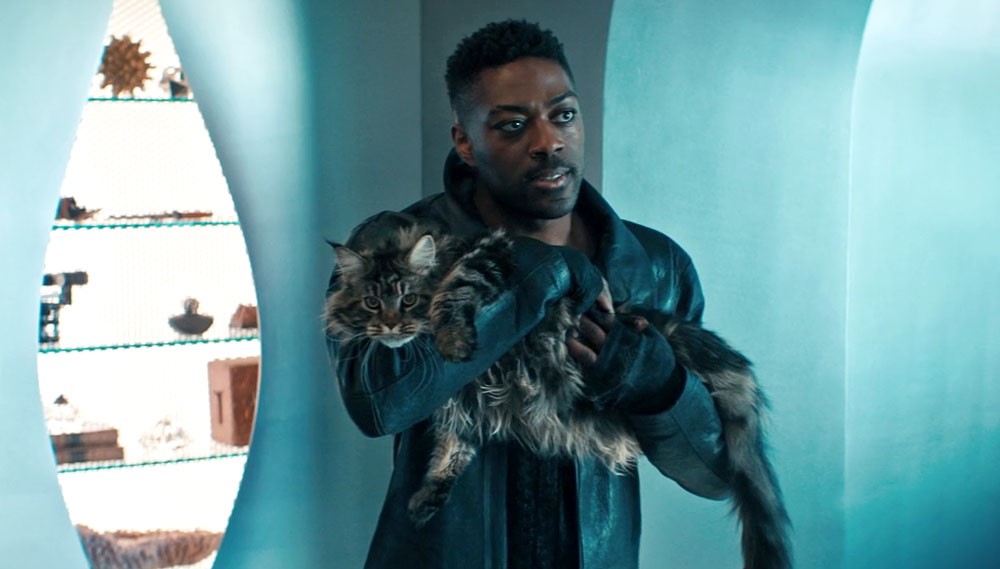
“Book” with his cat Grudge. “She’s a queen!”

Star Trek: Discovery on Paramount+
David Ajala as Cleveland Booker
Nuturing uncle to little Luca Doulgeris as Leto


Those eyes. Those EYES! Booker is independent and enterprising, keeping his fancy vessel supplied with expensive fuel by procuring and selling rare objects to those who can afford his services. He makes his own way and he doesn’t take orders. He’s also an empath who risks his life to save endangered animals. He even talks to PLANTS! What’s not to love? (You might also remember his hotness as Manchester Black on Supergirl.) And he’s a cat person. A big, Maine coon cat person. If you can get past his “Don’t get in my way” exterior, you’ve earned his loyalty and possibly a very emotionally attuned snuggle on his programmable-matter couch.
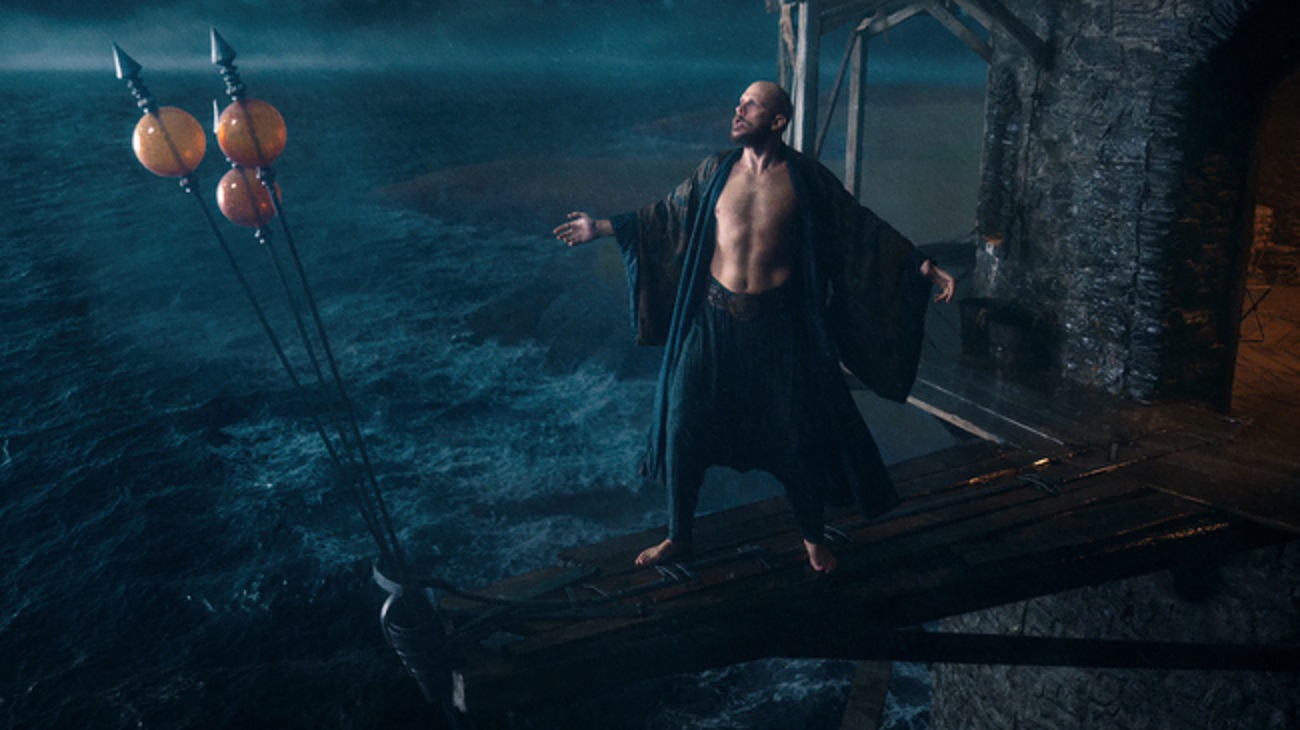
Merlin shouts defiantly into the maelstrom

Cursed on Netflix
Gustaf Skarsgard as Merlin
Biological father to Katherine Langford as Nimue


Merlin is cool because he’s clever, irreverent, ancient with experience and keeps threatening to cast vengeful spells those who disrespect him. Like his role as Floki in Vikings, Skarsgard is once again playing a trickster character. He’s not always the nicest guy, in part due to the post-traumatic stress he suffers from witnessing so many violent murders in the last great war (many of which he committed himself). He does doggedly persist at his goal of saving the world, which is pretty redeeming. But he also struggles with his addiction to both alcohol and swords of power. If you like your men tall, this Merlin is for you. He’s got that same long, wiry bod he showed off in Vikings, and seems to have aged amazingly well for an ancient wizard.
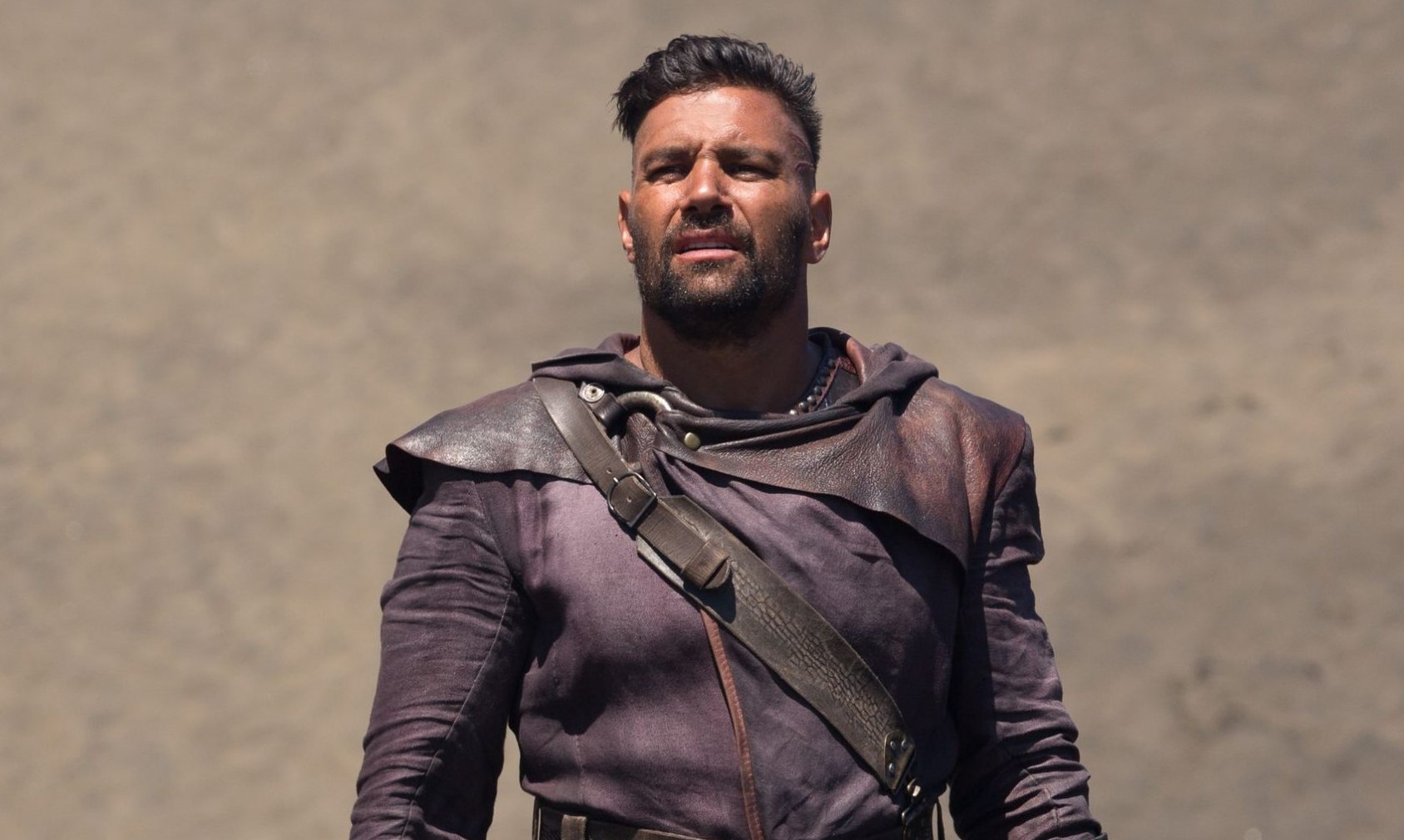
Allanon searches for demons in the desert

The Shannara Chronicles on Netflix
Manu Bennett as Allanon
Father to Melise Jow as Mareth


Try to ignore the fact that his name sounds like the name of an alcoholics recovery group. Allanon has no time for the sauce. He’s too busy running from sacred temple to sacred temple, slaying demons with his sword AND with his hundreds of years of magical experience. He’s working the paladin look in his robe-with-partial-armor and half-shaved head, revealing the ancient runes that have been carved into his very flesh. Swords AND spells. Rustic and highly educated, he is the complete package. He can get to be a little much in his relentless pursuit to DO THE RIGHT THING ALL OF THE TIME. Once all the demons have been cast out of Shannara, I bet he’d be a blast on a secluded week-long camping trip where we could bathe in the crystal streams of Canada (where this show appears to have been shot) and he could summon up a delicious feast around a cozy campfire. See you on the other side, Allanon.
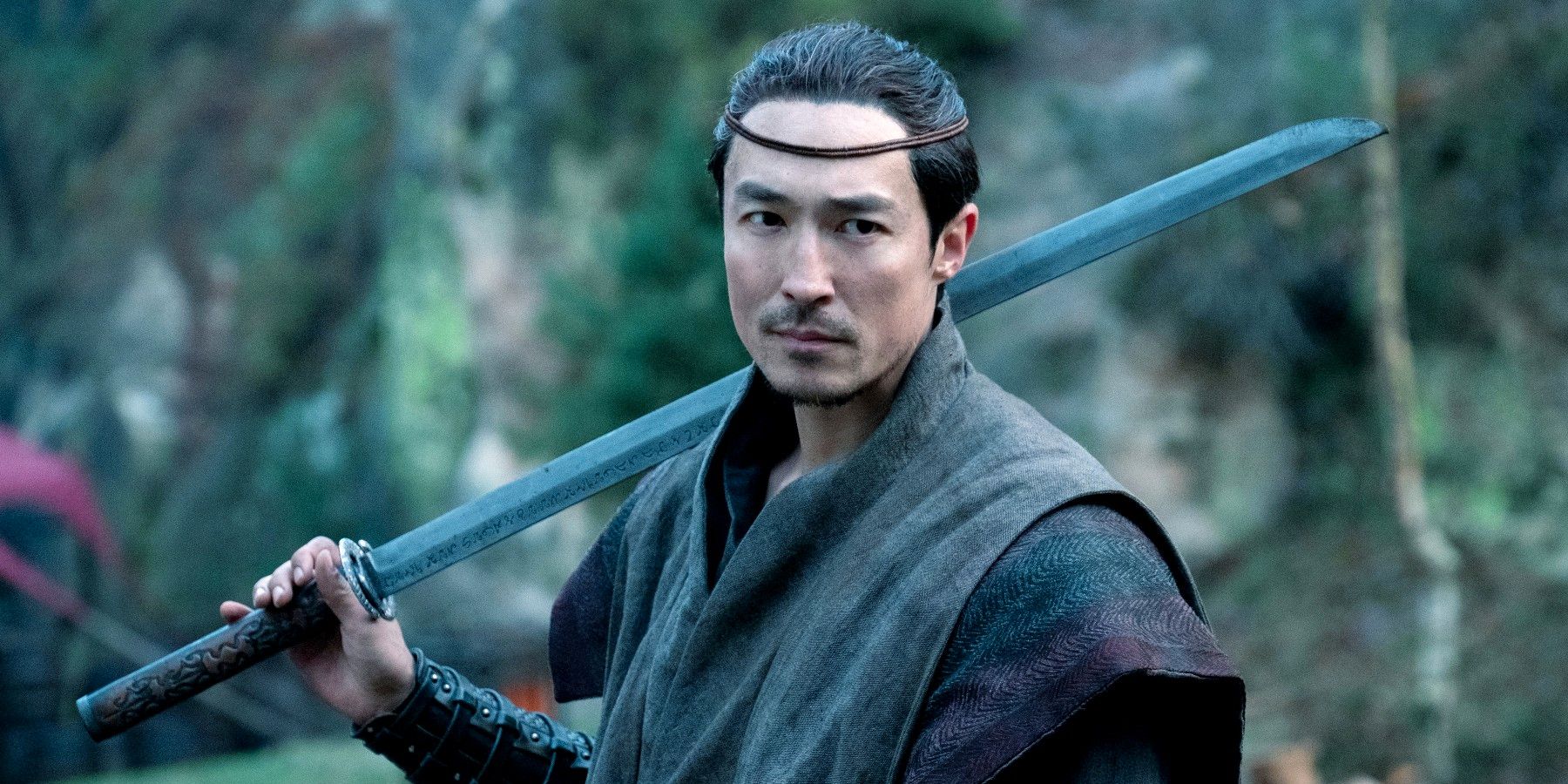
Lan feeling at home with his very big sword

Wheel of Time on Amazon Prime
Daniel Henney as Lan
Father of…well, he’s playing “daddy” with Zoë Robins’ Nynaeve al’Meara


So I haven’t seen Lan adopt or reveal any kids but I’m going to count him, because it’s my blog and I want to. Lan, like Geralt, is a man of few words. Lan is a “warder,” bonded to sorceress Moiraine (Rosamund Pike) as her defender until death do they part. They share an emotionally telepathic bond “greater than marriage” that is also not sexual. (So he’s available, ladies!) He swings his kick-ass sword in circles around Moiraine, protecting her from physical harm as she casts spells. He gruesomely dispatches trolls without so much as twitching his upper lip. Overheard in my living room: “Shut up! Lan’s about to kill a bunch more monsters and then pout about it! I’m going to miss it!” He’s always perfectly coiffed, with his hair combed back and held in place with a thin head-band. That plus the peak-shouldered medieval tunic, Asian heritage, and relentless stoic expression give him a slightly samurai feel. He does eventually open up emotionally and get busy with a traveling companion. We had to wait through most of season one for him to take off his shirt, but it was worth it.

Sing-a-Long Time!

I have been really uptight with this whole “shelter in place” for the coronavirus. TOUCH = DEATH but don’t panic! I guess I should re-read that Hitchhiker’s Guide. It’s been hard to watch the news and not feel a lot of anxiety. So I have been very, deeply grateful for all of the comics and comediennes who have put themselves out there doing shows from home. And I got a real kick out of Neil Diamond’s spoof of his own “Sweet Caroline” he posted from isolation on Twitter where he changed the “hands, touching hands” part to “hands, washing hands.”

But he didn’t change most of the lyrics, which I felt was a lost opportunity.

I guess I’m prone to earworms. Really prone, actually. And I did take that lyrics-writing class in theatre school. And I grew up on Weird Al. And maybe I don’t know when to leave well enough alone, but here it is:

Sweet COVID19

I hope you will never get that tune out of your head, and that whenever you feel stuck at home, you will sing this spoof to yourself and giggle. And share the earworm.

Mermaids are a Thing Now

Not that mermaids haven’t been a thing at any point in the past 200 years. Hans Christian Andersen famously wrote about them in 1836 but didn’t invent them. One appears in the Kalevala, the Finnish national epic, first published in 1835 but based on earlier folk tales. I was laid up after surgery last year and decided to read the Kalevala for a book I was outlining set in medieval Finland. There is a young woman who turns into a vengeful mermaid and it so captured my imagination that I put down my outline and started anotherKalevala_lohi attack outline centered on this young woman/mermaid.
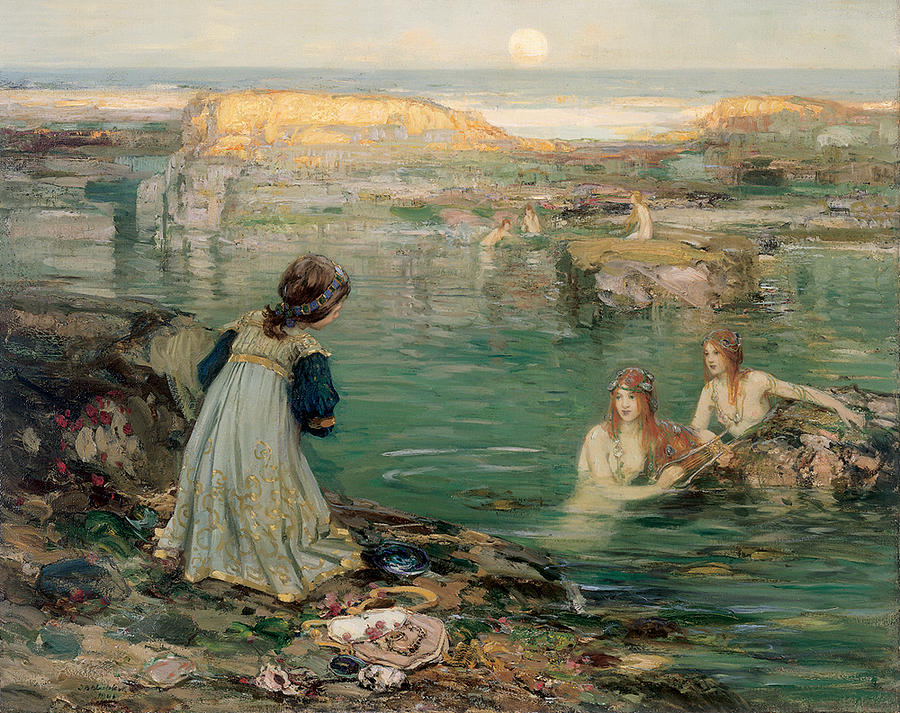
I had my A plot completed when I decided to round out my research with an online search for “Finnish mermaid” which quickly revealed that mermaids are not a thing of the past. They experienced a revival last year thanks to a woman who gives classes at public pools in Finland on “how to be a mermaid.” Participants both female and male (bless you, Finland!) wear fabric and plastic tails with a big fin on the end and learn to swim with their mermaid tail on. Further searches revealed that this trend has spread from Finland to Britain to Los Angeles.

I also read a great short story in the speculative fiction collection New Suns called “The Freedom of the Shifting Sea” by Jaymee Goh. It takes place in Malaysia and has a very different explanation on what kind of creature the mermaid is, but still paints her as a female avenger.

I feel this legend is ripe for the retelling. I read the Andersen story as a child and have always thought of mermaids as beautiful, gentle, loving, and forgiving. Andersen’s protagonist is very morally pure. As an adult I have reflected upon the popular Greek myth of sirens, known for luring sailors to their death upon the rocks, and realized that this is essentially the same creature. It’s just that Andersen paints them as delicate fairies and many other versions paint them as honeytraps. Both versions are typical sexist oversimplifications that assume these creatures aren’t capable of the same complexities of a human woman.sea-maidens-thomas-bromley

Nina at fairychamber.com tells us that in Finnish folklore there were several different names for what we would term in English only as a “mermaid,” depending on if they were salt water, fresh water, or mothers instead of maidens. All of these versions might lure someone (ahem: heterosexual men) into the water where they could easily drown. These various mermaids did not have fish tails in Finnish mythology, but instead wore “dresses made of sea foam.” In either imagining, these sea maidens don’t seem to get much coverage of their privates. I wonder who came up with that description (ahem: heterosexual men).

In my manuscript I’m having them wear clothes most of the time. I figure they live in a society, just like humans, so they’d have a taste for personal decoration. Humans have been decorating themselves with paint and shells for at least 100,000 years. Maybe mermaids wouldn’t wear the same sort of clothes humans wear but they would wear something. They would try to impress each other and try on new identities just like humans do with their clothing.

Books with Maps at the Front of Them

I was trolling the internet for agents’ Manuscript Wish Lists (manuscriptwishlist.com is a good place to start, if you are, too) when I saw an agent, who had marked Fantasy as a covered genre, remark that if this was the sort of book that would have a map at the front of it, then she was probably not interested in that manuscript. I WAS DUMBFOUNDED. How can you love fantasy and not love the map at the front of the book? That map is to me like the bell is to Pavlov’s slobbering dogs. It says “Ding-aling-aling! I am about to lay SO MUCH WORLD BUILDING ON YOU!” My brain salivates with anticipation. Will there be dark, haunted forests? Craggy, snow-capped mountains? Badlands of endless dust? Oceans whose distant islands remain as yet undiscovered? The map cries out, “YES, MA’AM! This story is vast, sweeping, and EPIC!”

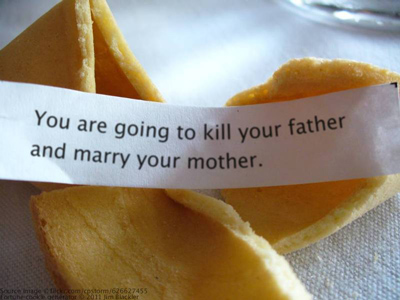
So much cause and effect in the series of events can be precipitated by geography. Remember the story of Oedipus Rex, who got into a fight with a rich old man on the road to Thebes about who would pass first? A fight that came to fatal blows, in which Oedipus killed the old man, who he later found out was his father? In high school I always was dubious about why they would come to blows — if neither would give way, couldn’t they both walk a bit on the opposite shoulders of the road and pass at the same time? In college I visited Greece and as we drove through the Peloponnese, our tour guide pointed to a narrow pass between mountains and said, “That is the spot where Oedipus slew his father.” OooooOOOOOooooh. That’s why they couldn’t both pass at the same time. There wWriter's Map - Atlas of Imaginary Landsere mountains in the way on both sides! That makes so much more sense.
The map in The Hobbit shows you why they have to go through the Mirkwood to get to the Lonely Mountain. The Atlas of Pern shows you the vast distances the dragons must teleport across to protect two continents from threadfall. The Marauder’s Map shows you how to get up to no good!

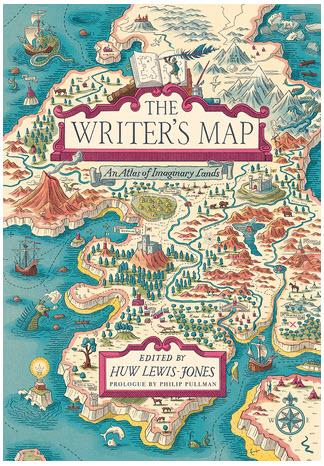
Which brings me to this awesome book I just discovered: The Writer’s Map: An Atlas of Imaginary Lands by Huw Lewis-Jones (Editor). WHY DID I NOT THINK OF THIS FIRST? I think you could lock me in a room for a few days with just this book and I would be content to look at the maps, remembering what unfolded in those places and imagining all the other things suggested but not yet revealed about these worlds.

I have my own maps for ALL of the fantasy novels I have outlined. It’s essential to my visualization process. It helps me remember who is where and what I decided to call that part of the world (it’s the Uplands – no, wait, the Riverlands!). I hope you all snatch a copy of this book and enjoy it. The editor has also been nominated for a “Special Award – Professional” at the World Fantasy Con this October. I hope anyone in attendance will vote in favor!


Genre Obligations

My little rant about prophecy (see previous entry) has spurred further musings on the obligation of genres. Many fantasy world readers accept the presence of prophecy or predestination as part of the genre. I can’t objectively say that my acceptance of so many sci-fi books and TV shows where people teleport places when they could take a space shuttle is any more rational than my rejection of the convention of prophecy. Though there are physics-based theories as to how we might one day teleport, all of them involve using massive amounts of energy. Way more energy than just building and fueling a space craft. So if you believe the science, why would anyone have their characters “beam down to the surface?” Sometimes non-SF/F people watch my favorite TV shows with me and call out these sorts of unexplained things. But I accept this without batting an eye. Accepting certain genre tropes is the price of admission.


And yet I cannot accept prophecy. It irks me to no end. I think this may be reflective of my worldview as an existentialist. I believe we are all responsible for our decisions, the actions we take based on those decisions, and the consequences of those actions. I am REALLY BIG on free will. What can I say? I was raised by Republicans in America. This belief that we have control over our destiny is what keeps Americans so happy! There are many recent surveys documenting the growing lack of class mobility in the states, and yet I cling to this core belief. Perhaps I am irrational. But believing that “everything happens for a reason,” or that you were always going to become a Slumdog Millionaire, no matter what your personal choices, because “it is fated,” seems even more irrational. I don’t believe god has a plan. You need to make your own plan. It’s called taking responsibility for your life. Aka adulting. When people in books get to fall back on this guideline for how to save the world I start to feel that this book is not about someone I No Worries is sinkingcan relate to. I have never had a cheat sheet on life. Real life, in my experience, is about being given a thousand different conflicting guidelines on how to be successful and having to sort it out for yourself.
 

I like to watch characters in novels do the same thing. I like to watch them know nothing, but think they know something, try, fail, and realize they know nothing. Then the mastery begins. They must try and fail many times before they save the world (Edge of Tomorrow, anyone?). If we don’t see them try and fail, then their eventual success does not feel earned. If they and everyone else knows they are the Chosen One, then at some point their success feels too easy. The emotional investment of the audience comes from watching this struggle. This is true regardless of genre.

Prophecy

Today let’s talk about prophecy. I deeply despise prophecies. I understand that the audience wants to know what the payoff is and when someone reveals a prophecy it lets them know “when that thing happens, the story is over.” But as any experienced fantasy reader knows THE PROPHECY IS NEVER WRONG. This undercuts both the suspense sustaining our attention through all the plot twists as well as the character-defining moments that happen when a protagonist is forced to make their own decisions and experience the consequences.

Sometimes a prophecy unfolds in unexpected ways, like in Frozen when Anna commits an act of true love for Elsa, thus breaking the curse of her icing over. The audience (and Anna) expects the “act of true love” to be something the handsome prince must do for her. The unexpected interpretation of the prophecy adds a reveal and a feminist message, which is exciting. But does anyone ever doubt that Anna will be saved from icing over? This movie is intended for a very young audience, so it is appropriate that the world is simple and safe.

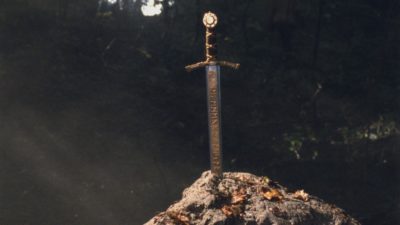
sword in stoneFor teens and adults, this formula can become tiring. A savvy fantasy novel/comic book/TV/movie consumer will hear “the sword can only be wielded by one of noble/elven/magician’s blood,” and instantly knows that this will happen to be our protagonist. Any mucking about after that with the protagonist pretending they don’t know they are going to wield this sword is silly and tries the reader’s patience. At that point the only thing we are in suspense of is how the protag does this, but not what they will do. Maybe I’m just a suspense junkie, but I have trouble reading all the stuff in the middle of the book when you just told me how the story ends. The stakes go way down when a prophecy assuring the good guy’s success is introduced.
Decision-making and its consequences become muddied when a prophecy is introduced. Is the protagonist choosing the blue door over the red door because they have a reason, or because they have “a strange feeling about it,” because they are the “chosen one?” I’m certainly not against magical boons: spells, charms, or enchanted objects that answer questions and open doors for a protag. But when a character gets through many of their obstacles either because they were born with a magical sixth sense that gives them all the answers, or because they are surrounded by their “chosen one” entourage who does everything for them, it really makes the reader lose sympathy. It’s hard to root for a protagonist who is spoiled and never has to make a hard decision and then deal with the terrifying consequences. We sympathize with a character who stands on the precipice of the unknown, in over their head, and has to give it their best shot without knowing if their scheme will work, but knowing it will cost them dearly to try. These sort of decisions reveal what is most important to the character – and what they are willing to sacrifice to get it. No one has to spell it out for us because it is revealed through their actions.

oedipus fortune cookieIt is part of the essential nature of our existence that our lives unfold in a linear fashion and we can’t know how all of our hopeful endeavors will turn out. Are we doing the right thing? Should we quit while we’re ahead? Did we miss the forest for the trees? It is one of the great comforts of reading to sit with a protagonist in their moment of darkness and listen to them ponder what they should do. It lets me know I am not alone. To rob them of the agency to make their own decisions reduces them to paper dolls. I do not care to read about such characters.
 

No Man Can Look Inside Without Going Insane

I’ve noticed this sub-genre in sci-fi that I have decided to call “No Man Can Look Inside Without Going Insane.” It posits women as having access to some sort of mystical power that allows us to pass into places of chaos or intuition and not go crazy.

I was struck by this phenomenon last week when I saw my first Peter Davison Doctor Who. He was the Fifth Doctor – the one from 1982-84 who wore a celery corsage. It was a four-part arc called “The Kinda.” The titular people were natives of a jungle planet who seemed to all be male (not unusual in TV representations of groups) and strangely mute and passive. When we finally meet some female Kinda, we see that they can talk and aren’t as passive as the men. They are alarmed to see the Doctor and some other off-world males have invaded their jungle. One of the off-world lieutenants has a paranoid fear of the jungle “getting in” with its “germs and seeds” and taking over their outpost. An old Kinda seeress gives a young woman a box and tells her to give it to the off-world men. Every man who looks inside the tiny box finds it empty, but then experiences some sort of telepathic link with the members of the Kinda and promptly goes insane. It is the very contaminant the off-world lieutenant feared. When the Doctor manages not to lose his mind and instead locates the female Kinda from his telepathic experience, the old seeress declares with awe, “No man can look inside without going insane!”

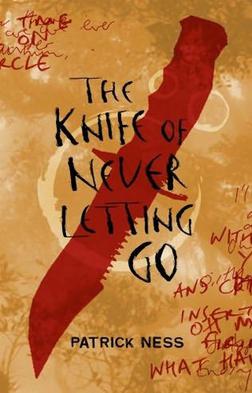
The Kinda story reminded me a lot of a Middle Grade sci-fi book I read called The Knife of Never Letting Go by Patrick Ness, published 2008. It’s from the POV of a 12 year old boy named Todd who lives in a town of all men (at first I didn’t think this was a deliberate choice, but rather a male author’s worldview) where everyone can hear everyone else’s thoughts. It’s unpleasant as most men in town seem to have anger management issues and are paranoid about others knowing what they’re thinking. When Todd Knife_of_Never_letting_Go_coverruns away and finds another town where there are woman, he discovers that women on his planet don’t suffer from this telepathic broadcasting. The women of his hometown were all killed because the men were driven insane by the knowledge that they couldn’t hear the women’s thoughts.
It also reminded me of Frank Hebert’s Dune, published 1965. Paul Atreides, heir of a noble family, is the only man to drink the poisonous, prescience-giving Water Of Life and live. He tells the head of the mystical Bene Gesserit Sisterhood who are the only others who dare attempt it, “You are afraid to look into that dark place. If you have the courage to look there, you will find me, staring back!” His mother, a member of the Sisterhood, was ordered to bear a daughter, but knew her husband wanted a son and so bore him one out of her love for him. Paul Atreides is the man who was supposed to be a woman and as a result, he becomes a messiah.

I love that these narratives point out differences in women’s fundamental relationship to the world, and suggest that poorly understood phenomenon can be deeply powerful. But I’m also really wondering what this magical quality is that women have and where I can get some. I guess I forgot to ask for it when I picked up my “woman card.” In my experience, “women’s intuition” simply amounts to paying attention to those around you and reading their body language. Perhaps these narratives turn on the idea that men, trained to protect their ego above all else, can’t access certain types of mental abilities until they give up that ego. Sometimes you are not discreetly you. Any woman who has ever been pregnant would know what that feels like. Such ambiguous borders between Self and Other can be very destabilizing to someone whose self-worth is built upon their independence or on their ability to physically overwhelm any Other which threatens them.

Language and Culture

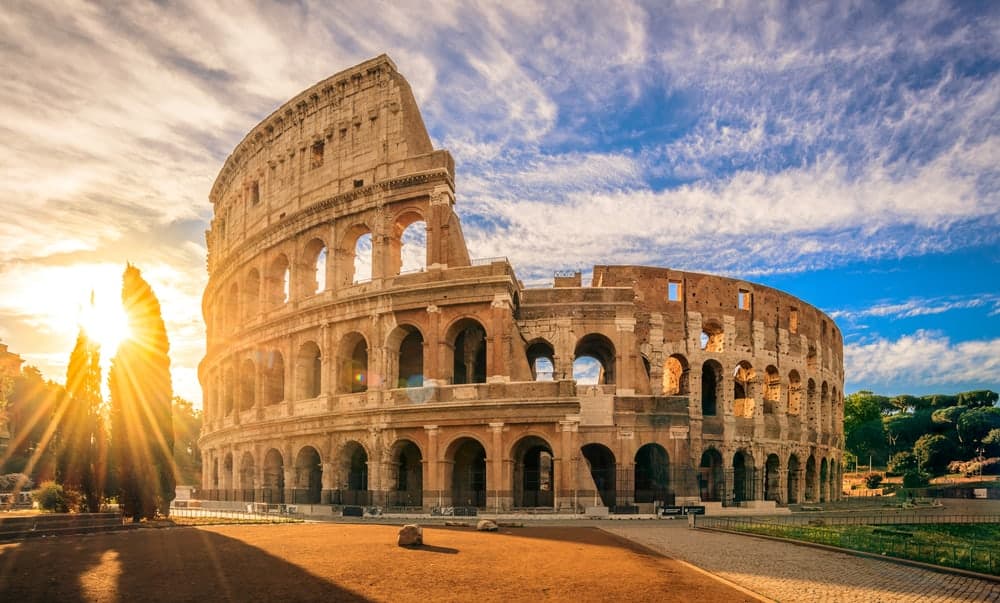
I have learned many things about the cultural origins of specific words in my research for my novel. For instance, the “Colosseum,” as it was originally spelled, got its name from a colossal statue of Nero that stood next to it. So it was almost the Neroseum! But knowing this, I still worried that if I used the word “Coliseum,” readers would think I was referring to the Coliseum in Rome. Could I use the word to mean a coliseum? But what if in the world of my novel there is only one Coliseum? If I capitalize it, because it is the Coliseum of the Golden Empire, will it make readers think I am referring to the Coliseum in Rome? Hopefully the fact that my novel takes place in an entirely different universe will be a tip-off that this is a different Coliseum.

rome-colosseum

And then there was “barbarians.” This is derived from a word the Greeks used to describe people who didn’t speak Greek. They thought those people sounded like “bar-bar” when they spoke. Or so wikipedia would have us believe. So really, it meant Mediterranean people outside of Greece. And then by the 16th Century several European groups used “Barbaria” to refer to North Africa – AKA The Barbary Coast.

So I ditched “barbarians” and I went with “reivers.” There’s a word you don’t hear every day. Unless you give tours along the English-Scottish border. I uncovered this term while hiking Hadrian’s wall. Or rather, while watching a documentary about the history of the Scottish-English border in preparation for my journey there. Reivers are raiders, from both sides of the border, who stole from their neighbors in the on-going  war between England and Scotland. Even when there wasn’t officially a war going on, there was a hostile relationship, and the government of each side encouraged their locals to raid across the border.

Which leads us to platoons, “the smallest military unit commanded by a commissioned officer.” If you want to say “There was a small piece of a big army in town, on duty, with a commanding officer,” you might say “There was a local platoon.” But if you set that “platoon” in a medieval world, you might get a very well read reader who emails you that “This term was first used in the 17th century, not in the Middle Ages, and is anachronistic in this setting.” And then you get to hope most readers don’t know this and won’t be jarred out of the narrative.

If I wanted to write my novel in language that was as authentic as possible to the time and place in which my fictional world is based, then I guess I would have to learn 13th Century Old Prussian and write my novel in that language. Do they have a word for Quinceañera?

A Good Writer is a Good Rewriter

I met with a few agents and got some good feedback on Why Your Novel Has Problems. I have been working through significant rewrites. It’s really hard to keep momentum going after YEARS of rewrites. But it’s also really hard to give up writing. Impossible, I think, for me. Or if I gave it up, I would have to take up giving spontaneous speeches at public gatherings. I think I am just too opinionated to stop expressing myself about certain things. Things like what it’s like to be me. To be all of us. Am I really alone in my experience? When you express your experiences, you sometimes find out that the answer is yes. But you also find out who your people are. The people who have the same experiences, or similar ones, and who have a similar outlook on life. Both of these things are valuable lessons.

In many ways when I die, my world will die with me. The world I perceive is only a product of my perception. But in other ways it will live on in the minds of others. I guess reading and writing has always been a way for me to attempt to share the worlds of others who are far away and/or dead and to share my world even when I am far away and/or dead. So there’s my immortality, eh?

Querying

OK, so I am satisfied with the manuscript and it is under 90,000 words. Whew! That only took about 18 months of editing. But I think that I can safely say I cut a lot of fat out of it. That will happen when you have to cut 1 out of every 4 words in your manuscript.

Now I must query. I have longed for this day, but now that it is here, I have discovered that it is terrifying. There are so few words in a query, it seems really easy to screw up. If you have an awkward sentence in your draft, it sucks, but it is also a passing thing. When you have 5,000 non-awkward sentences to go with it, it doesn’t seem like such a disaster. This is not so in a one-page letter. In a one-page letter, a single awkward sentence can really kill the mood.

I WILL BE JUDGED. And probably not fairly. But then, life is not fair, and I probably have won the lottery already in the game of chance, what with not being born in a 3rd world country, having looks AND brains, and all that.

The thing I most fear is learning that these several years of figuring out how to write a novel have been a waste of time. A FAILURE. Not that being a playwright was scoring me the big bucks, but at least some theaters let me in the door and I got produced. And I suppose if I can’t get an agent, I could always self-publish. But then I also have to self-promote. And I already have a full-time job.

At least I have gotten an education in How To Write A Novel. Note to self: Novels are a completely different texture than plays. It’s like the difference between fishnet stockings and a wool blanket. There is all this FILLER in novels. Like people can’t just imagine the stage business and they need you to spell it out for them. “She gritted her teeth through her reply.” Of course she did! She’s angry! Didn’t you just read the dialog?

But the structure of the plot and the development of the characters is pretty similar. You just have more plot – and possibly more characters – in a novel. But not as much plot as I thought I was going to stuff into it. Turns out you have to spend words on “what the characters look like right now,” so it takes away from the words you can spend on “what the characters are doing.”

I’ve had several readers generously donate their time and opinions to my development process. And more than one expressed puzzlement over why I did not describe my main character’s appearance in detail in the first few pages. It’s odd to me, because as I tried to get into my main character’s head, I didn’t see how she would know what she looked like, since it was her POV. Are people really that self-conscious? OK, teenaged girls, yes. But my main character is a teenaged girl in a medieval world with no full-length mirrors. No photographs. No printing presses. I like to think she would not be as self-conscious as girls today. My hope is that she would not. And my hope is to represent that honestly in my novel as a real way that a girl could be, if she weren’t instagramming herself daily. But there I go getting all personal-is-political.