Is Agent Phil Coulson the Jean-Luc Picard of S.H.I.E.L.D.?

As anyone who has watched Marvel’s Agents of S.H.I.E.L.D. can tell you, Agent Phil Coulson is the leader of a brilliant and physically kick-ass team of special agents that fly around on their invisible jumbo jet investigating dangerous, unexplained phenomenon and protecting the world from supervillains. I love Agent Coulson with all my heart (yes, I know, he’s make-believe), for being the experienced, calm, sensible guy in charge who guides his diverse and sometimes hot-headed team with a strong moral compass and sense of personal mission. He provides firm leadership and says no to his team’s requests pretty regularly. But he gives reasons. And he becomes a father-figure for a 20-something orphan who hacks her way into the team, both encouraging her to grow as an agent and protecting her from some of the darker aspects of their missions. Screenwriting guru Robert McKee talks about finding a “nexus of goodness” that your readers can root for. Agent Coulson is it.
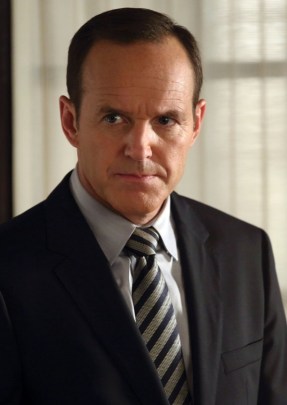
phil coulson
Agent Phil Coulson

As I reflected upon my great attachment to this fictional character that drove my binge-watching so much video-on-demand, it occurred to me that he was very similar to another figure that I still harbor a great affection for: Captain Jean-Luc Picard of Star Trek The Next Generation. Captain Picard also leads a diverse and sometimes hot-headed crew that flies around confronting danger and strange, alien technology at great personal peril to protect the innocents in the universe. The Star Trek captain is also the cool-headed strategist who knows it’s a trap, but knows they have to go in, anyways, to rescue their team member. He is the backbone of morality that guides the crew. Every Next Generation fan knows that if Picard can make it out alive, he can fix things. We have faith in him. Just like Picard is a Captain in Starfleet, Coulson is a Director in S.H.I.E.L.D., a secret but trustworthy organization full of exceptional individuals doing spectacular work.

This faith in the goodness of this leader, and of the organization he leads, is vital to our enjoyment of the show. At the end of STTNG season one, there is a conspiracy that goes to the very heart of Starfleet. Admirals have been taken over by mind-control aliens and only Picard possesses the smarts and integrity to root out this corruption and end it. Similarly, in season one of Marvel’s Agents, the secret organization of S.H.I.E.L.D. itself is infiltrated by an even-more-secret organization called Hydra and Coulson’s team is cut off from the larger family of support they once had. Yet Coulson and his team, save for a single turncoat, remain morally pure. We don’t ever stop rooting for them.
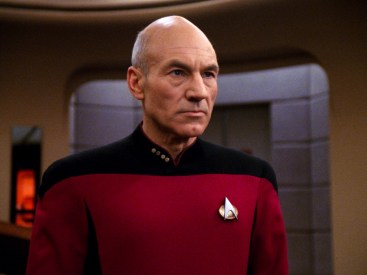
patrick-stewart-star-trek-jean-luc-picard
Captain Jean-Luc Picard

Both leading men are co-opted by alien biology in the course of the show. Coulson is injected with alien blood to save his life. Jean-Luc is kidnapped by Borg and his body is colonized by their nanobots. In both cases, the fans at home are threatened by the thought of a world in which their great, moral leader can no longer be trusted to provide wise advice and strong direction to a world in chaos and danger.

As I examined these characters’ function in both series, and my deep emotional attachment to both figures, it occurred to me that Marvel’s Agents of S.H.I.E.L.D. is a product of ABC and their “Family” programming and that this view of the world in which the all-powerful force in charge is actually a really swell guy keeping us all safe – in fact, a white, straight, male, middle-aged American really swell guy – probably reflects a lot on current attitudes in the United States and in myself. Picard wears a Starfleet uniform that was very 90s in its form-fitting style. Coulson wears what amounts to a uniform in his perpetual black suit and tie. There is something about this constancy that is reassuring. Paired with a controlled (somewhat repressed) emotional expression, this makes both men fit well into the Midwestern or WASPY tradition of masculinity. (Coulson is, in fact, called out as being from Wisconsin, though Jean-Luc, ever the 90s man, grew up on a winery in France.)

This traditional masculinity and white, straight, middle-agedness strikes one even more as a deliberate choice by the producers when one considers the team of special agents under Phil Coulson’s direction. By the end of season one, Marvel’s Agents of S.H.I.E.L.D. even has two black men on their dozen-strong team AT THE SAME TIME! The second in command on Coulson’s invisible jumbo jet is an Asian woman (who, by the way, doesn’t walk around half-naked talking in a soothing voice). Another light brownish leading lady is eventually revealed to be part Chinese.

The official head of S.H.I.E.L.D., Nick Fury, is an African American, and has been established as such in the Marvel universe as far back as comic books released in the 1970s. But ABC chose not to do a show about Nick Fury leading a team. Is it because having a black man in charge would not be assuring to the majority of the middle class Americans that ABC producers are seeking to capture for their advertising dollars? I think it likely. Since Samuel L. Jackson in particular was cast as Nick Fury in the current Marvel universe, I think it safe to say that he would not be that reassuring. He’s no Avery Brooks (Captain Benjamin Sisko on Deep space Nine).

I don’t point out this WASP-y centrism of either show to disparage them as bad shows. I love both shows, both leading characters, and think they are both progressive in several ways. I just think it wise for us WASPy viewers at home to be aware that the entire universe of these shows has been created in our own image. But it as sci-fi has taught us, it is only one of many co-existing alternate universes.

Also, Agent May is Spock.
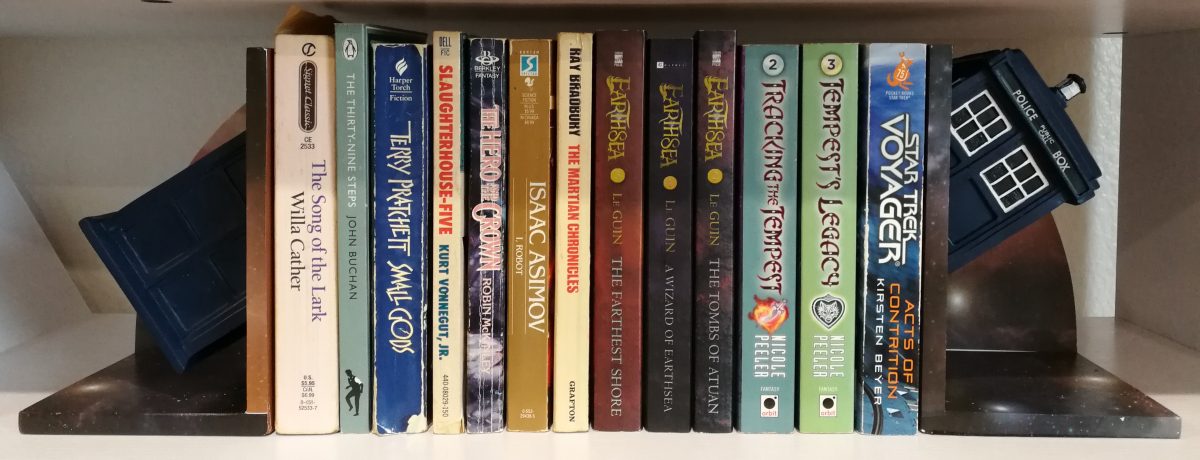
Sci-Fi Fantasy Adventure

I used to have sci-fi and fantasy friends. I used to share giggles every time Data on Star Trek TNG self-consciously inhaled before speaking or Brock on The Venture Bros dead-panned “Gotta love yer Zep.” Alas, no more. My sci-fi /fantasy friends have all left town or drifted away, or – worse yet – had children. Now I giggle alone.

But no more! I have finally gathered my energies to overcome my general introversion and exhaustion and attend a sci-fi meetup group in our fair city of lost angels and I HAVE NOT TALKED SO MUCH SCI-FI/FANTASY IN YEARS!

It was a SCI-FI FANTASY ADVENTURE!

Would you pay for CBS All Access to see the Star Trek series releasing in 2017? Is JJ Abrams destroying the franchise? Why does he always have to do that alternate universe thing? He did that in Fringe, too. And Lost. And will he do it in Star Wars? Is having one man write the screenplay to both franchises putting too much power in too few hands? What about Game of Thrones? What’s up with George RR Martin? Will he die before he completes the series? How much of his intended plot lines did he share with the HBO producers? Are the TV producers doing a better job of storytelling than he did in the novels? How can a series go wrong with such awesome costumes and well-designed CGI dragons? (Answer: It can’t!)

Does Doctor Who have strong season arcs, or do the producers just drop in finale-episode teasers unrelated to the rest of the plot? Is it really a through-line if none of the previous episodes were impacting the outcome of the finale? When Doctor Who establishes rules of the show like “You can’t go back in time and meet the old you – it would destroy the fabric of the universe,” and later goes back in time and does exactly that, is this annoying or endearing? See, I think that’s a love question. Because when you love someone, all those little faults are endearing. And when you don’t, they are annoying. I love Doctor Who, but as a sci-fi/fantasy writer, YOU MUST ESTABLISH RULES FOR YOUR WORLD AND THEN STICK TO THEM. Otherwise, the audience gets confused and the endings feel unearned. I think this is also my beef with JJ Abrams and his alternate universe trick. It feels like the writers ran out of new episode ideas and then pulled open a drawer and decided to use some old episodes they wrote before they killed off the characters that are in them. So now they have to figure out a way to bring dead characters back. This can be done through either a.) time travel or b.) a gateway to an alternate universe. Abrams seems to prefer the latter. I prefer the former. Doctor Who does both.

Anyways, I hope all us sci-fi/fantasy lady fans will get out there and partake of juicy films coming our way like Ghostbusters, Suicide Squad, and next year’s Wonder Woman! I can’t wait to pick them apart over drinks with you later!

Welcome Back!

I’ve been a little MIA the past few months. This is because my creative writing has sadly not yet made me filthy rich and I have to spend time at a day job. Crazy, no?

The novel is still in progress. The beginning has been rewritten so many times I have lost track of all the versions. Suffice to say it’s a lot more efficient than before. There are still some tweaks to make, but in lieu of driving myself insane with YET ANOTHER OPENING CHAPTER REWRITE, I have decided to give the rest of the novel a thorough reading and bring it in line with all of the major plot and theme changes that went into the massive opening rewrite.

It has been so long since I wrote the middle part that I actually don’t remember a lot of it. So I’m entertained by my own writing! And the bits where I got too wordy are standing out now that I have fresh eyes. Fresh brain. Freed of much expectation. When I know what’s coming next, I kind of stop really seeing the page. It’s already in my head, you know?

These past few weeks while I’m reading my novel I’m thinking “Hey, I like this girl! She’s smart and tenacious! Ooo, a witch! Ooo, there’s action!” So this is very encouraging to me. Typically I feel pretty bored reading my own stuff, cause I just wrote it and I already know what happens. I like plot twists and reveals, and probably for this reason I rarely read a novel (other than my own) more than once. There’s no suspense, which is a large part of my reading pleasure. I know some people like to read their favorite books over and over again, but there are only about five novels that I have read more than once. From what I recall, they are: A Wrinkle In Time, The Hobbit, Little Women, The Song of the Lark, and The Hero and the Crown. Note that more than 20 years has passed between some of those readings.

Lessons Learned

My Hadrian’s Wall hike was good, but involved tramping through a lot more sheep poop than I anticipated. Perhaps a lesson I can take with me into my faux-medieval world building. The main thing that I gleaned from reading about the Roman occupation of Britain is that the forts and the towns that grew up around them were so economically and politically intertwined that to take one from the other deeply harmed both sides. The Romans had their baths outside their forts and in the town that stood alongside the fort. But every Roman fort needed a bath, and thus every Roman fort needed a town of locals who they could hire to heat their baths, butcher their meat, sew their shoes, and shod their horses.

My unexpected discovery came from walking through so many Norman castles – completely without planning to – and picking up vocab about halberds, hauberks, gambesons, garderobes, and crenelated parapets. I learned about several styles of helmets for men, armor for horses, and armored helmets for horses (the Roman commander at Vindolanda apparently had a very fancy Arabian steed).

I learned that the great forests of England are no more. They’re all sheep fields now. Full of sheep manure. And Roman ruins.

But also learned that no matter how simple the monument (say, faceless monoliths, like those of the Ring of Brodgar) or even purile its content (like the Viking graffiti of Maeshow Tomb), if it is carved in stone, it will stand the test of time. And the local children will climb on it and make up stories about it, and the outsiders will come as tourists to stare at it and wonder. Objects that are older than human memory inspire wonder in those who behold them.

The beginning of the end of the beginning

I have completed major rewrites on the first 50 pages of the novel! I have dispersed it amongst some valued readers and have received a lot of positive feedback (i.e. “This draft is better than the last one.”) I did get a request to bring back some of the flashbacks that I cut. Or perhaps it would be more of a prologue, as it would be one flashback at the beginning which isn’t really a flashback if you haven’t established any other timelines. I’m torn about the suggestion. I also received a note that “It’s easier to follow without the jumping around in time.” I guess my question is “Can an 11-year-old follow it, and if so, would she like it enough to read more?” I bet she could. So I guess we’ll brainstorm a prologue.

The other thing I’m noticing about the feedback notes is that people miss the meticulous world-building. All of my readers so far have been adults, most of whom do not read a lot of YA fiction (though some are fantasy adventure readers). I am kind of proud to have written something so spare and plot-driven that it annoys middle-aged people. YESSSSS!!! I focused on doing that and seem to have been successful. I am good for something after all.

I have also received some suggestions for how I can world-build by showing and not telling, which is the best of both sides of the coin (lush imaginary details, but also staying action-based).

I love lush, imaginary details. Fictionalizing without getting in trouble for lying. When I was twelve at summer camp, I went to a leather-working class one day and made myself a bookmark. On it I stamped out the letters “I ❤ FICTION.” Then, because they ridiculously did not have a unicorn stencil (what were they thinking?), I used the horse stencil and a line stencil to stamp my own unicorn on the bookmark. I think maybe what I should have written was “I ❤ FANTASY,” but I was not yet old enough to make that distinction. If it was a lie that wasn’t trying to be believed, I liked it. I think the line between fiction and fantasy is pretty fuzzy still today (because bodice-rippers obey the laws of physics, does that make them plausible?), but I understand the colloquial use of the terms.

Word count is approaching the coveted 90,000 mark! It’s at 91,000+. The last half of the book could use some gutting. I know there is some lazy language in it. Some puttering along in a not very urgent or direct phrasing kind of way where I am sure to qualify all of my adjectives so you don’t get the idea anything too extreme or upsetting is going on. You know, comfortable little kiddie korner stuff that makes you feel all quaint and cozy like you’re reading The Hobbit. I do love The Hobbit. But I don’t know that any book with that slow a pace would interest many YA agents these days. Unless, you know, I already had a best-selling adult fantasy trilogy. Luckily, along with my meticulously puttering self, I also have a belligerent, short attention span self that I can summon up to edit with. She gets half way though a paragraph and yells “BOR-ING!” and deletes everything she’s just read and doesn’t look back. (Don’t worry, I save my old drafts.)

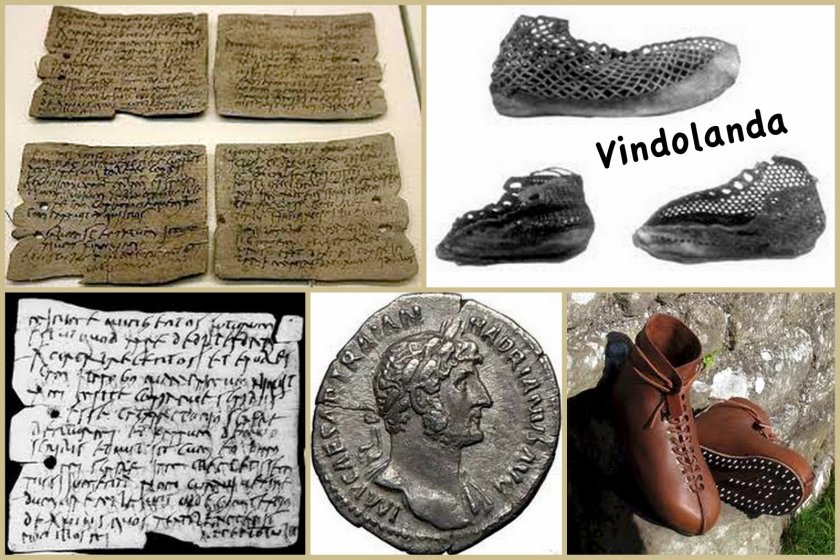
Next week I am taking a trip to England where I am going to visit the ruins of several Roman forts along Hadrian’s Wall. I hope to glean some insights about the political situation I have portrayed in my novel. There is a similarly occupied, remote northern province where the protagonist grows up. The tension between the foreign soldiers and the local townspeople that they live amongst is a constant presence in the first fifty pages. Indeed, the sense of oppression this engenders in the main character is something she takes with her for the rest of the novel. The best Roman archaeological find in England (and perhaps anywhere outside of Italy) is at Vindolanda. It is most remarkable for the Vindolanda tablets. They contain personal, hand-written letters sent from across the Roman empire to Britain and reveal intimate details like invitations to birthdays, weddings, and even a mother saying she is sending her son fresh underpants. (I am not making that up.) The Romans may have slaughtered lots of Britons and displaced local culture, but they were people, too. It is this complex reality – both the colossal injustice and the precious foibles the occupation brought with it – that I seek to comprehend and capture in my own writing.

Vindolanda

Wish me luck on my travels.

When to add and when to subtract

Shifting gears between the play and the novel. Getting a better grasp of what needs to be cut – and where – from the YA fiction. Still taking a step back on that one. If I get sucked in, I’ll just start writing scene after scene after scene. The imagination has no end, as long as I am still alive. But the novel has to have an end. And less of a beginning and middle right now, too. So I am equal parts writing and deleting. I’ll brainstorm 1000 words, then stop. “Do I really need this?” I ask myself. Then I delete 300 of them and work the piece in with the main document. Then I delete another 3000 words of the stuff I wrote last spring. Then I sigh and vow to learn my lesson: RESEARCH THE STANDARDS AND FORMATS OF THE BUSINESS, *BEFORE* YOU FINISH THE FIRST DRAFT. 90,000 words or less, dummy!

But I guess when you’ve never completed a novel before, how do you know if you’re even capable of it? Is it really worth sinking $250 into a Writing Pad workshop to find out about a business you may not want to be in? Just like all that sheet music I bought in college when I thought I might work in musical theater? Which I use absolutely zero of today? I guess it really depends on if you have the $250 to spare. My day jobs have supported absolutely all of my artistic endeavors. Don’t think you’re going to be an artist, kids, unless you already have a degree in something else.

On the playwrighting front, I am back to the development side of it. No word count to work towards there. I had a great research interview with a Investment Capitalist guy last week who gave me some great language insights. I am about to whip out some “follow-on investments” to add to my “fund of funds” as we due our “deep diligence” about “customer traction” and “package a strategy” to entice “value add investors” to buy in and feed our goal of becoming a “unicorn.” Oh yeah, my main character is about to get a vocabulary make-over.

Trying to get an interview with a neurobiologist, too, to fill out the speech pattern of the secondary character. Of course, since the play is set in the future, a lot of the technology the neurobiologist will describe doesn’t actually exist (yet). But I should start with something real and blend in the imaginary bits.

My happy place

Creative writing is the thing that makes me most happy, and so I keep returning to it. I do want to make money and I do want a response from an audience, but even without either of those things, I still enjoy the act of sitting down with my thoughts and putting them into words. Creative writing calms me. Instead of being forced into a series of Outlook-designated time blocks of predetermined tasks, I let my thoughts surface as they are and reflect on them. Instead of running from task to task and meeting to meeting, I immerse myself in a world that moves no faster than my own thoughts. When I’m writing, I exist in a world in which ideas, emotions and images are the most solid things present. A world in which I am able to balance logic and feeling in a delightfully entertaining interplay. It feeds my mind and my soul. It offers respite from the maddening world. It is my happy place. And I don’t do nearly enough of it.

The play’s the thing

I’ve taken a break from the novel to work on a second draft of my play. It feels good to be back in familiar territory. I know already how to structure a full-length play, and what level of granularity to show things in, and what degree of realism is appropriate. With the novel, I am still re-examining and adjusting these things as I go. The play is called The Next Big Thing. Yes, I know that is a terrible title. A title that will get zero hits on my play if someone ever googles that text string. But it is the title right now. And I like it. It is helping me write the thing. Writer hat is on right now. Marketer hat will come later.

It feels good to move through something with confidence. To know my ideas and generally how to express them. To not be afraid of criticism, because I already know the criticism won’t be “This will never work. Give it up.” I guess no one’s told me that about the novel, but I have told myself that. I mean, at a certain point you have to question how many resources you are investing in any endeavor and if this is really the best way to spend your precious time.white_teeth

Plays, when compared with novels, are fast and easy. You don’t even have to write down anything that someone doesn’t say! Can you imagine your favorite book with everything deleted from it except the dialog? White Teeth by Zadie Smith is actually one of my favorites, in no small part because of the abundance of dialog in it. I’ve got a lot of dialog in my own novel. I like how readily it can capture characters.

The Next Big Thing is about technology, investment, and its impact on society. I realized as I was describing this to my boyfriend last weekend that this is the exact same theme I covered in “The Work of 50 Men” a decade ago. Uh, I guess I’ve found my niche. Maybe I should apply for a Sloan Foundation grant to get this one produced, too.

In the short-term, I’ll be meeting with Fell Swoop Playwrights to workshop the script. Nothing like a room full of playwrights, scones, and coffee, to get your Sunday started off on the right foot!

1000 Words a Day

I used to have an arrangement with a friend and fellow writer where we would send each other 1000 words a day. It was both to be accountable to someone for our daily, and otherwise self-supervised, writing goals. But it was also a way of saying “I did this!” and pinning our work to the figurative refridgerator for someone to see. We were not obligated to read or respond to the other person’s 1000 words. But it can be nice to browse a snippet of fiction in your inbox each day, especially when it gives you a peek into the intimate thoughts of a valued soul. And frankly, she’s just a good writer who’s fun and interesting to read.

Now that I am rewriting, I have no words to send her. I am deleting 1000 words a day. This is the flip side of that ritual. The novel is too long and, well, some sections are kind of slow. So I am tightening them up. It’s crazy to me, though, to think how important those 1000 words were to eek out and send when I wrote them. And now it’s slash and burn. Syanora, suckers! I know the novel is better for it. I just never thought I would be cutting such large swathes of the manuscript. And yet the plot seems to hold up just fine.

It’s amazing the perspective you can get just from setting something down for a few months. I feel confident about the editing I’m doing. The chapters move faster. The story is more direct. I just am hoping that in the future, on my next novel (dare I assume I will have the gumption to write another?), I will have a better sense of the level of world-building detail and character reflections I actually need to lay down in my first draft. But hey, it’s the first time I’ve tried to make one of these things, so there’s bound to be some trial and error. Here’s to building it better, stronger, and faster. This novel will be my Six Million Dollar Man.

Writing is Rewriting

They say “writing is rewriting.” Or at least someone on my Facebook feed keeps posting an image quote of it. Unfortunately, I find it really hard to write and edit at the same time. If I stop to criticize every word as it hits the page, I’ll never get anything out. I daresay my ability to shush my critical voice while writing new material is probably the reason I have not had writer’s block since junior high school. Which is a good thing. But it also means there is clean up to do later.

Now that I have overwritten the novel and let it sit a few months, it is much easier to hack and slash. It’s kind of freeing, actually. Which is surprising. I guess I usually hate to cut what I’ve written, as I am emotionally attached to the characters. I want everyone to live that moment with my protagonist. If I cut it, no one will ever know about this side of her!

In grad school, when we had to cut scenes we were really sentimentally attached to, our teacher called it “killing our babies.” These tender moments are our brain children. But sometimes those children don’t belong in this particular story. Those children are sinking the ship. So we throw them overboard.